
An AI agent on a website is a trained conversational layer that resolves the customer's question end to end rather than handing off a generic FAQ link. On a Chatbase-built site, that means one agent runs support, sales, and product guidance in the company's own voice.
Why a keyword match is not enough
Keyword matching breaks the moment a real visitor phrases a question in their own words, asks a follow-up that depends on the first answer, or combines two questions into one message. The FAQ bot has no memory of the previous turn and no model of the documents behind the answers, so it either returns the wrong card, repeats itself, or hands the visitor to a human. A trained agent carries the conversation, pulls the right passage from the indexed sources, and composes a reply that fits the context the visitor is in (How Chatbase Deployed AI Agents Across Ecommerce, Media, and Fintech: Customer Stories and Results).
What changes once the agent is trained on your sources
The shift shows up in three behaviors on a live site. The agent answers a pricing question from the published pricing page even when the visitor asks for a comparison, a quote, or a plan recommendation. It handles follow-ups that reference the previous answer instead of resetting the search. And it answers in the company voice, because the training material is the company's own help center, policies, and product copy rather than a generic web corpus - that is the line between a trained layer and a static FAQ.
What changes once the agent is trained on your sources
The shift shows up in three behaviors on a live site. The agent answers a pricing question from the published pricing page even when the visitor asks for a comparison, a quote, or a plan recommendation. It handles follow-ups that reference the previous answer instead of resetting the search. And it answers in the company voice, because the training material is the company's own help center, policies, and product copy rather than a generic web corpus - the trained layer draws on indexed sources while a static FAQ replays fixed cards.
What the agent handles on your site
One trained agent runs three jobs on the same site:
- Support. Answers return-policy, shipping, and account questions from the published help center, and steps aside when a case needs a human.
- Sales. Pulls pricing, plan, and comparison answers from the live pricing source and recommends the right tier for the visitor's situation.
- Product guidance. Walks a shopper through specs, sizing, and fit using the catalog and product copy the business has already published.
How training works
Once the sources are inside the builder, the agent is trained on them rather than on a generic corpus, so every answer is grounded in the documents the business has already published. Training turns those pages, PDFs, and feeds into the working knowledge the agent replays during a conversation, the same way a new hire would read the help center, the policy PDFs, and the pricing page before taking a support ticket.
From raw sources to a trained model
The training pass ingests the help center, the policy documents, the internal docs, the catalog and pricing feeds, and any resolved transcripts the team feeds in, then indexes that material so the agent can pull the right passage into a reply. The model is grounded in the company's own knowledge rather than the open web, which is why a pricing question is answered from the published pricing page and a return question is answered from the returns policy. When a published source changes, the next training pass picks up the new wording and the loop after launch stays closed.
Configuring actions and guardrails
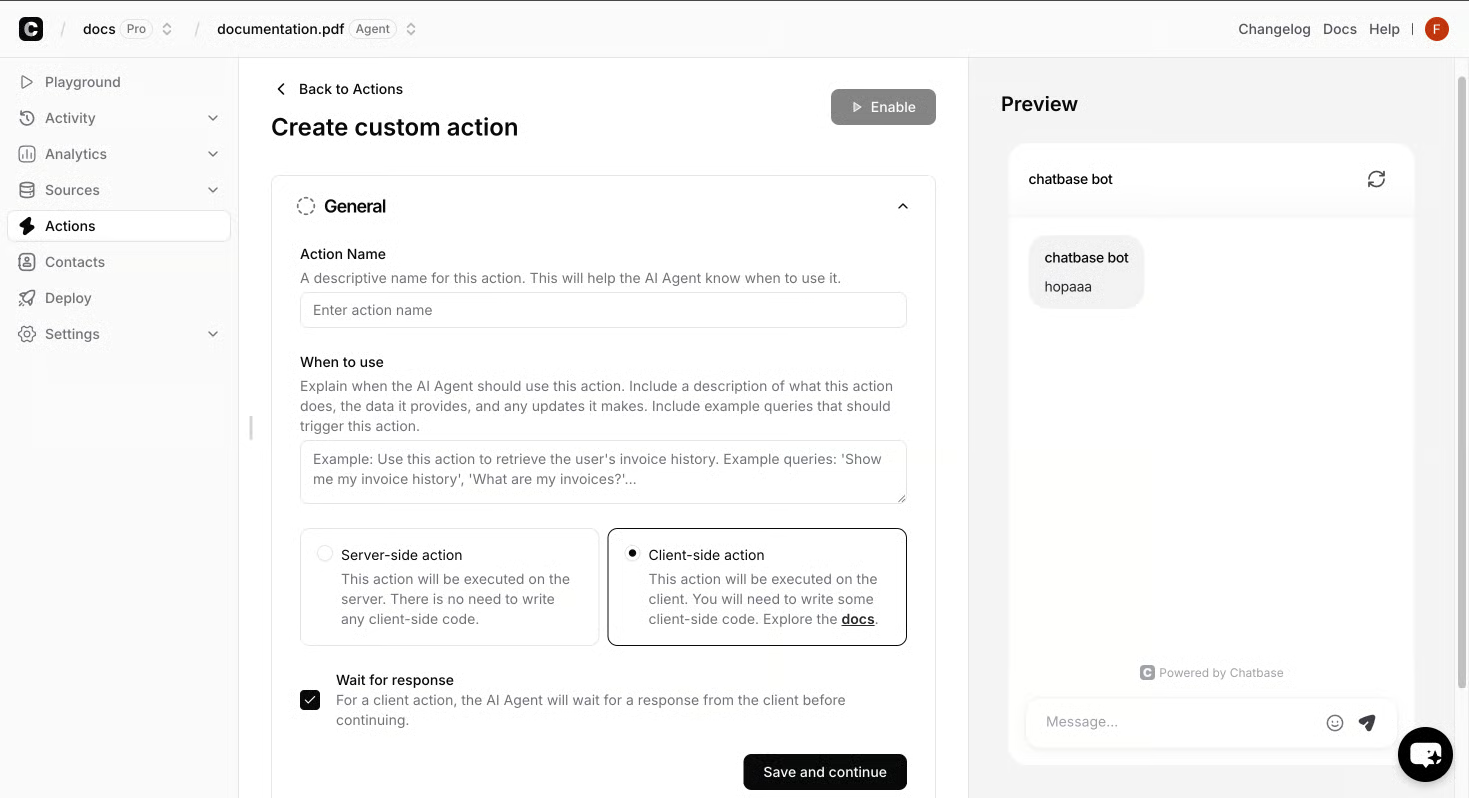
Once the sources are in, the team defines the agent's role, tone, and the actions it is allowed to take. Backstage is where the team inspects, debugs, and refines behavior as gaps surface.
Testing before going live
Before the widget ships, teams validate accuracy and brand consistency across chat, email, and voice inside the builder so the launch does not become the test environment.
Deploying across channels
The same trained agent then goes live in the website widget, the support inbox, and the phone line, with full context carried between them.
What to watch once the agent is live
After deployment, the work shifts from building to observing. Inside Backstage, the team can inspect transcripts, review escalations, and refine instructions as real conversations surface gaps.
The signals that matter
Four signals tell the team whether the agent is doing its job: resolution rate, escalation rate, queue deflection, and brand-voice fidelity - the share of conversations where the agent answered in the published voice without a human rewrite.
| Signal | What it shows | Where to act |
|---|---|---|
| Resolution rate | Share of visitors whose question the agent answered end to end | Add or refine sources for missed questions |
| Escalation rate | How often the agent stepped aside, and the reason | Configure actions or broaden sources |
| Queue deflection | Volume absorbed that would have reached a human team | Confirms coverage across support, sales, and guidance |
| Brand-voice fidelity | Whether transcripts sound like the business | Refine tone instructions and review sample answers |
How the loop improves the agent
Every resolved conversation feeds the next training pass, which is why a Chatbase agent gets sharper the longer it runs on a site. New policies, catalog changes, and seasonal questions become the next round of sources, and the loop between a missed answer and a refined instruction stays short.