
The first agent I tried to ship was on a small store site I'd built in a weekend. I had a support inbox that never slept and a checkout that kept dropping visitors at the shipping step. I wanted something that would answer the obvious questions - sizes, return windows, whether the thing in stock was actually in stock - without me waking up at 2 a.m. to type the same reply I'd typed on Tuesday. What I learned the hard way is that "an AI agent for a website" isn't one product. Some are glorified FAQ search bars. Some run real actions, push data into Zendesk or Slack, and remember who the customer is. So before I looked at logos or trial buttons, I wrote down the jobs the agent had to own on my site: deflect the repetitive tickets, route the messy ones to a human, and nudge the people who were almost ready to buy. That list did more work than any feature comparison.
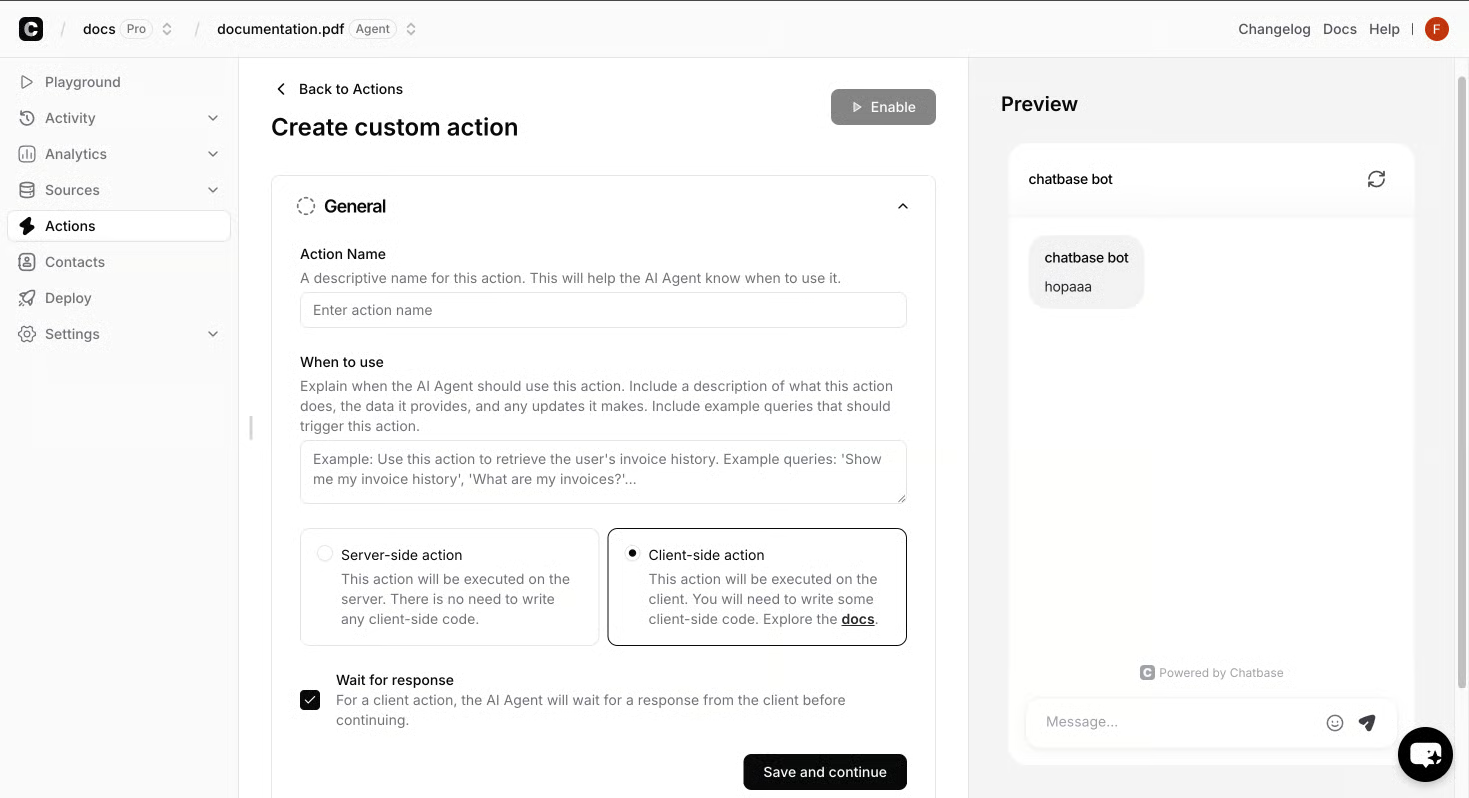
- Natural language that goes past keyword matching - readers ask the same question five different ways, and the agent has to catch them all.
- Knowledge base ingestion that pulls from files, help-center pages, Notion docs, and product copy without me re-typing every FAQ.
- Multi-channel coverage for chat, email, and voice, with the same brain behind each surface so a customer doesn't get re-onboarded every time they switch.
- A real escalation path - escalation and handoff to a human when the question gets weird or the stakes get high.
- Analytics that tell me resolution rate, handoff rate, sentiment, and the questions I never knew people were asking.
- Integrations that fit the stack already on the site: my helpdesk, my CRM, my booking engine, the calendar tool my team already lives in. Pricing shape mattered more than the sticker. A flat monthly fee is easy to budget against but punishes you when a campaign drives a spike. Usage-based pricing scales with the value but punishes you when the agent gets stuck in a loop and burns tokens on the same confused customer. I looked for plans that let me cap spend, or at least alert me before I cried into a credit-card statement. Deployment surface was the next filter. WordPress, Shopify, and custom builds each have their own install stories, and the agent that's "one click" on Shopify can turn into a weekend of CSP errors on a custom site. I checked the embed, the widget, and the API, and made sure whichever path I picked wouldn't force me to rebuild the page around the chat bubble. If you're staring at a shortlist right now, my advice is to stop comparing feature lists and do this instead: pull the five questions your customers actually ask this week, paste them into every candidate's trial, and watch what happens when one of them is slightly outside the knowledge base. The agent that handles a graceful "I'm not sure, here's how to reach us" beats the one that invents a confident answer every time. A broader look at the full practitioner guide to picking, training, and going live is worth bookmarking before you commit. I also made one rule that saved me later: the agent I picked had to be the agent I could also explain to a non-technical teammate. If I couldn't describe the escalation rules in two sentences, I'd be the only person who could fix it when it broke, and that's a single point of failure nobody needs.
Training it on the content that already lives on the site
I burned a full afternoon on my first training pass because I kept pasting things in the wrong order. The agent didn't need a polished essay about my return policy - it needed the same half-sentence a tired shopper types at 11 p.m. The feed itself was unglamorous: a help-center export, a Notion page with sizing notes, a few product description pages, and the FAQ I'd written two years ago and never updated. The first version answered half of those confidently and invented the other half. I had to mark which docs were canonical, which were background, and which were old enough to ignore. Guardrails mattered more than I'd expected, and so did tone, so I wrote both at the same time. The rules in plain language: never promise a refund, never confirm an order that's actually unconfirmed, always offer a human when the customer is upset. Alongside those, I gave the agent three example replies in the voice I wanted - short, warm, no exclamation points - and a matching "do not" list so it would skip stiff and corporate replies. The real training loop started after launch, not before. I read every handoff transcript on Monday mornings, spotted the questions the agent kept missing, and either rewrote the source doc or added a new example pair. Two weeks in, the agent had stopped inventing shipping times; a month in, it was catching the edge cases I'd assumed would always need a human. A month of Monday-morning transcripts did what a week of pre-launch polishing could not - the practitioner's playbook for going live is worth keeping open through that first month.
Going live across chat, email, and voice without breaking what works
The launch I almost ruined was the soft launch. I flipped the widget on for 10% of traffic, walked away to make coffee, and came back to a Slack channel that looked like a small fire: two checkout questions answered with last season's shipping table, and one refund reply sent before I had a real refund flow behind it.
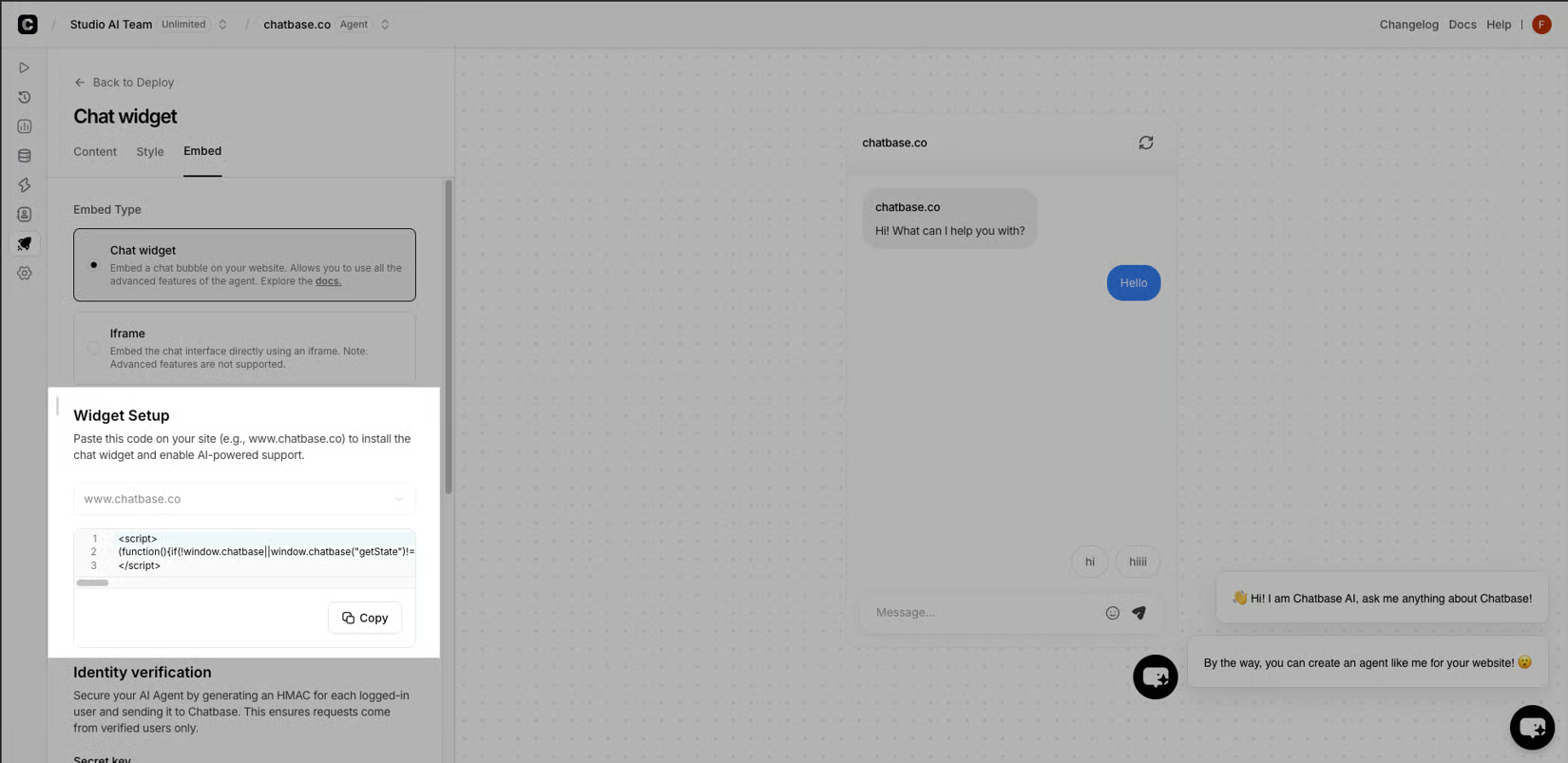
- Internal testers - team only, with a kill switch in the admin bar.
- 5% of site traffic - chat and email live, voice still routed to humans.
- 25% of traffic - voice enabled, every handoff transcribed and tagged.
- 100% - all channels live, on-call rotation paid in espresso. Looking back, the changes aren't dramatic - they're the small, boring ones that compound. I'd start with a smaller source set, mark it as canonical before launch, and stop trying to import every doc the company has ever written. I'd define what "done" looks like for the first week - one handoff rate, one resolution target, one tone rule - and refuse to chase three dashboards at once. The Monday-morning transcript habit is the one that pays for itself.