
Building an AI Agent for Customer Support
As I built and implemented AI agents for customer support, I learned that creating a personalized experience is key. One of the primary benefits of using an AI agent is its ability to handle repetitive tickets and billing questions, freeing human support agents to focus on complex cases. For instance, integrating an AI agent with Zendesk can auto-assign and tag tickets, while connecting it to Stripe allows agents to access subscription and invoice details for verified users. By leveraging these capabilities, businesses can provide 24/7 support and increase revenue.
To illustrate this, consider the following comparison:
| Benefit | Description |
|---|---|
| Handling Repetitive Tickets | Automate responses to common inquiries |
| Freeing Human Support Agents | Focus on complex cases and high-value tasks |
| Providing 24/7 Support | Ensure timely assistance to customers at any time |
Training the AI Agent for Sales and Product Guidance with Specific Scenes
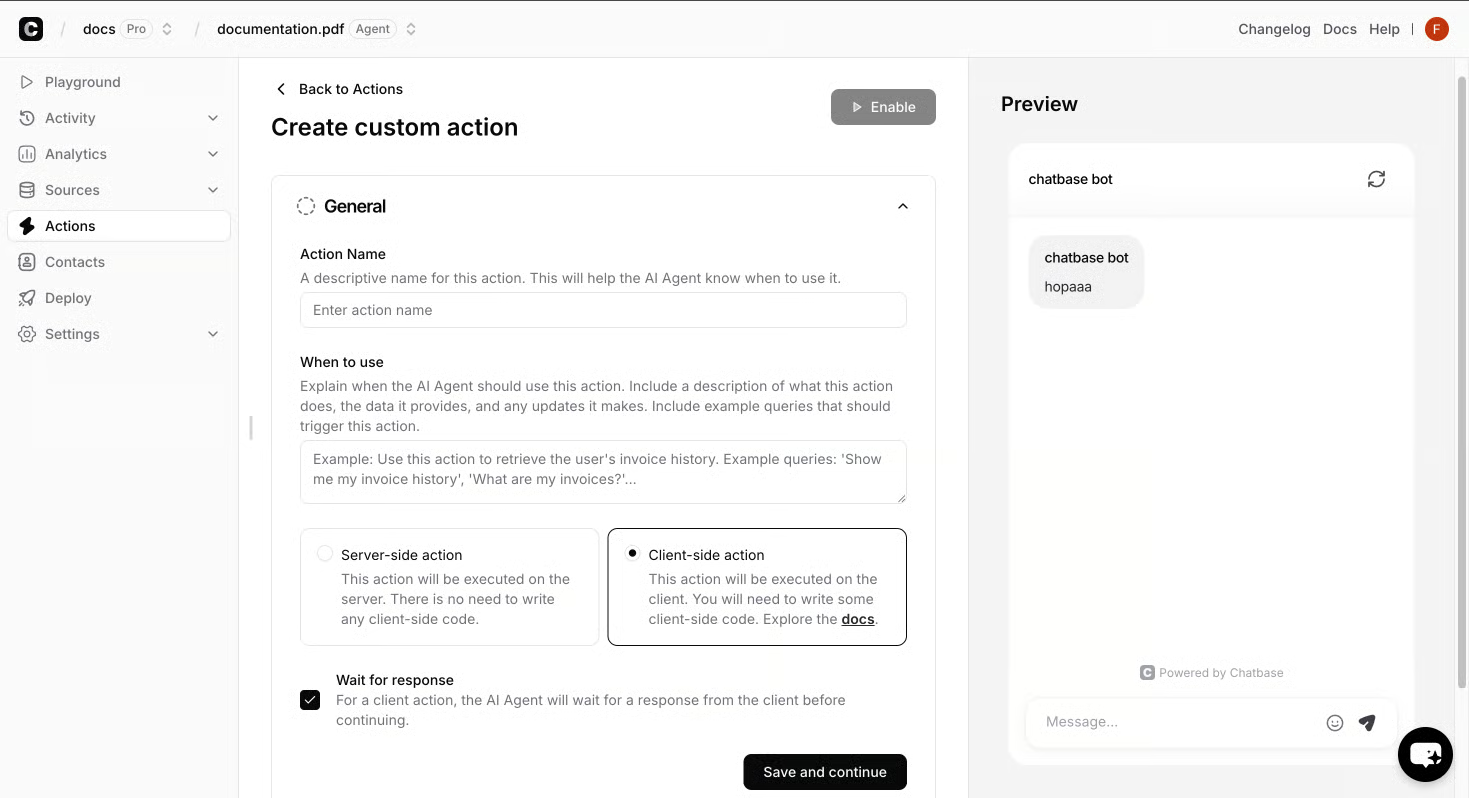
To train an AI agent for sales and product guidance, I focused on creating personalized experiences for customers. One of the primary benefits of using an AI agent is its ability to engage prospects, answer product questions, and guide conversations toward revenue. For instance, I trained the AI agent to answer questions about product features, pricing, and availability, and even provide personalized recommendations to customers. By integrating the AI agent with tools like Zendesk and Stripe, I was able to auto-assign and tag tickets, as well as access subscription and invoice details for verified users. This allowed the AI agent to provide more accurate and efficient support to customers, helping to resolve issues and increase revenue. To illustrate this, consider the following example: when a customer asks about a specific product, the AI agent can provide detailed information about its features, pricing, and availability, and even offer personalized recommendations based on their purchase history. By providing this level of personalized support, businesses can increase customer satisfaction and loyalty, ultimately driving revenue growth. For more information on implementing an AI agent on your website, you can check out the Introduction to AI Agents for Website.
Deploying the AI Agent Across Chat, Email, and Voice with Detailed Examples
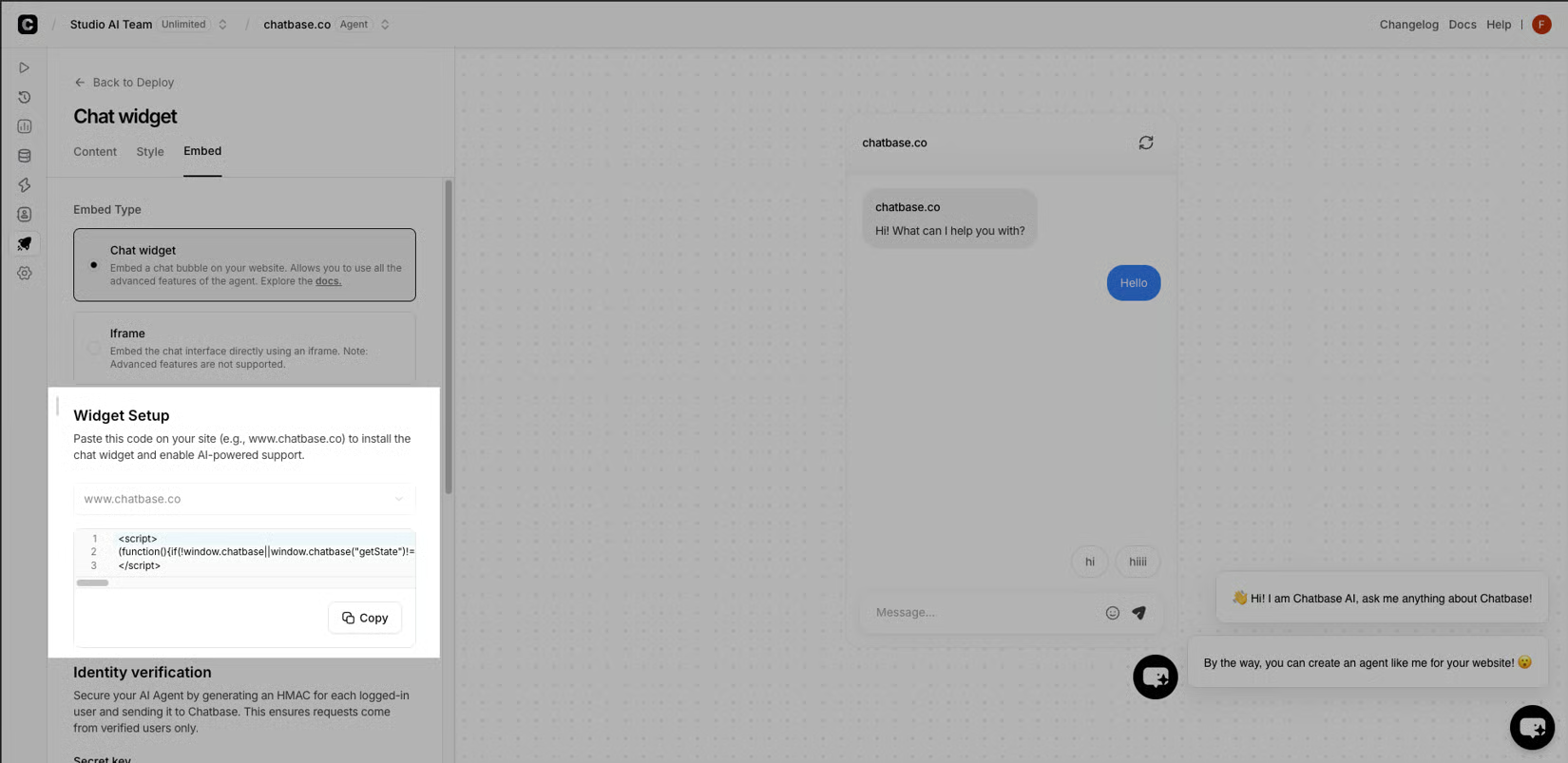
To deploy an AI agent across multiple channels, I connected my data sources and defined the agent's role using Chatbase. This allowed me to integrate with tools like Zendesk and Stripe, enabling the agent to auto-assign and tag tickets, as well as access subscription and invoice details for verified users. For instance, I trained the AI agent to answer questions about product features, pricing, and availability, and even provide personalized recommendations to customers. By integrating the AI agent with these tools, I was able to provide more accurate and efficient support to customers, helping to resolve issues and increase revenue. To learn more about implementing an AI agent on your website and how it can benefit your business, you can check out the Introduction to AI Agents for Website.
Optimizing the AI Agent for Better Resolution Rates with Integration Examples
To optimize the AI agent for better resolution rates, I focused on integrating it with other tools, such as CRM systems and knowledge bases. By doing so, the agent could access more information and provide more accurate solutions. For instance, integrating the AI agent with Zendesk allowed it to auto-assign and tag tickets, while connecting it to Stripe enabled agents to access subscription and invoice details for verified users. This integration helped increase the agent's resolution rates and provided better support to customers. By leveraging these capabilities, businesses can provide 24/7 support and increase revenue.