
Introduction to AI Agents for Website
As someone who has worked with AI agents, I've seen firsthand the impact they can have on customer experience and support. In this article, we'll explore the benefits of implementing an AI agent on your website. An AI agent is more than just a chatbot - it can use your company's own data as its knowledge base, take real actions, and push outcomes into your stack. For example, an AI agent can help customers with inquiries and requests, such as answering questions about sizing, shipping, and returns, or even booking meetings and sending Slack alerts. With the right tools and integrations, an AI agent can be trained to provide personalized guidance and support to your customers. To get started with building and deploying your own AI agent, you can check out AI Agent for website, which provides a step-by-step guide on picking, training, and going live with an AI agent. ## Introduction to AI Agents for Website
Benefits of Implementing an AI Agent, including answering customer inquiries and providing personalized guidance
Implementing an AI agent on your website can significantly enhance customer experience and support. For instance, an AI agent can help customers with inquiries and requests, such as answering questions about sizing, shipping, and returns. By utilizing your company's own data as its knowledge base, an AI agent can take real actions and push outcomes into your stack. This can lead to improved customer satisfaction and reduced support queries. Some benefits of implementing an AI agent include providing personalized guidance and resolving issues end-to-end. To learn more about the benefits of AI agents, you can check out AI Agent for website.
Choosing the Right AI Agent for Your Website
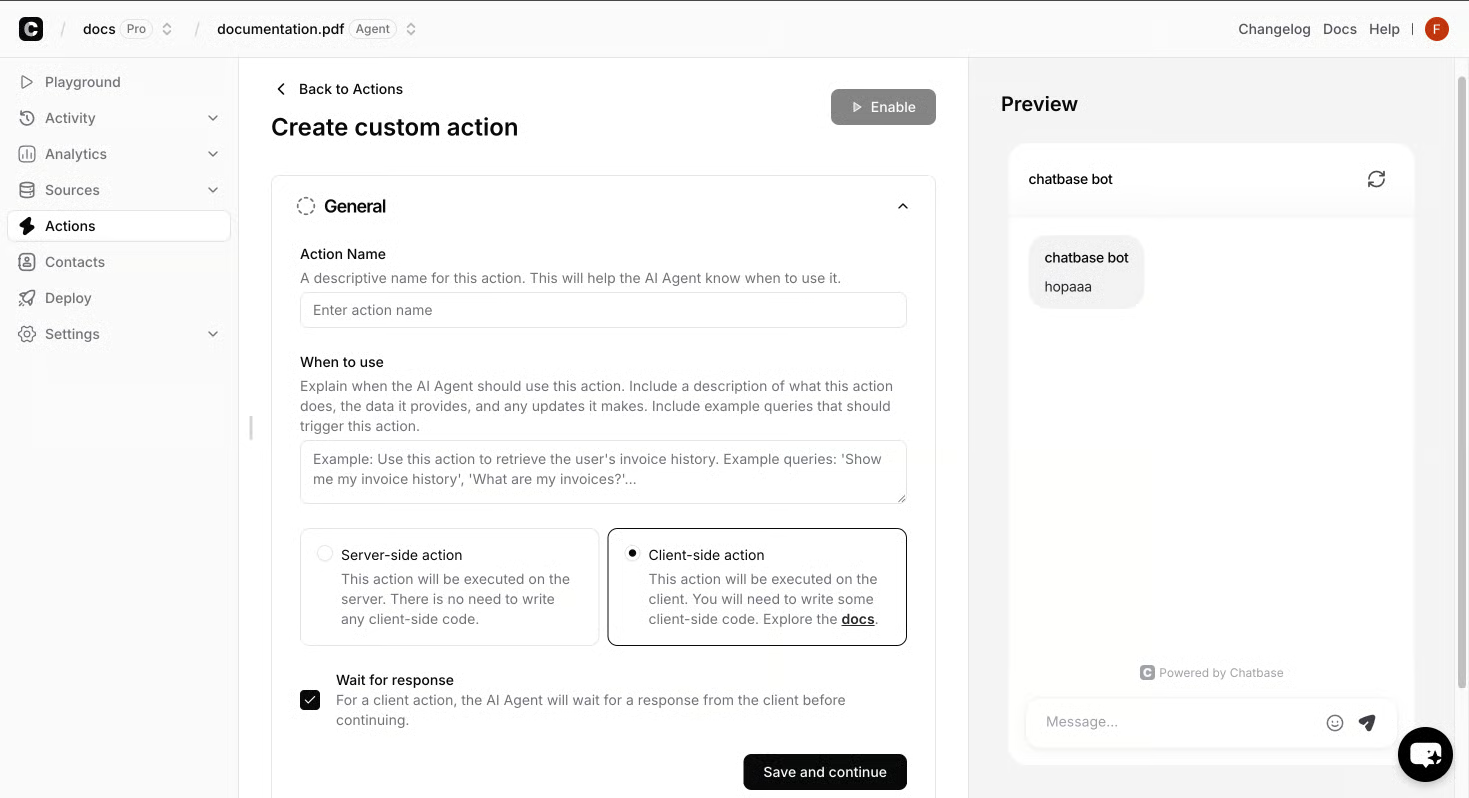
When selecting an AI agent for my website, I considered several key factors to ensure I chose the right one. First, I defined the role of my AI agent and the tasks I wanted it to perform, such as providing customer support or helping customers with inquiries and requests. According to Chatbase, an AI agent can be trained to provide personalized guidance and support to customers, helping them navigate the website and find the information they need. For instance, an AI agent can be used to help customers with sizing, shipping, and returns, or even booking meetings and sending Slack alerts. With the right tools and integrations, an AI agent can be trained to provide efficient service and resolve issues end-to-end. I also considered the type of AI agent I wanted to build, as Chatbase offers several types, including customer support agents, sales agents, and product guidance agents. Each type has its own set of features and capabilities, so it's essential to choose the one that best fits your needs. To learn more about implementing an AI agent on your website, you can check out AI Agent for website.
Training and Deploying Your AI Agent
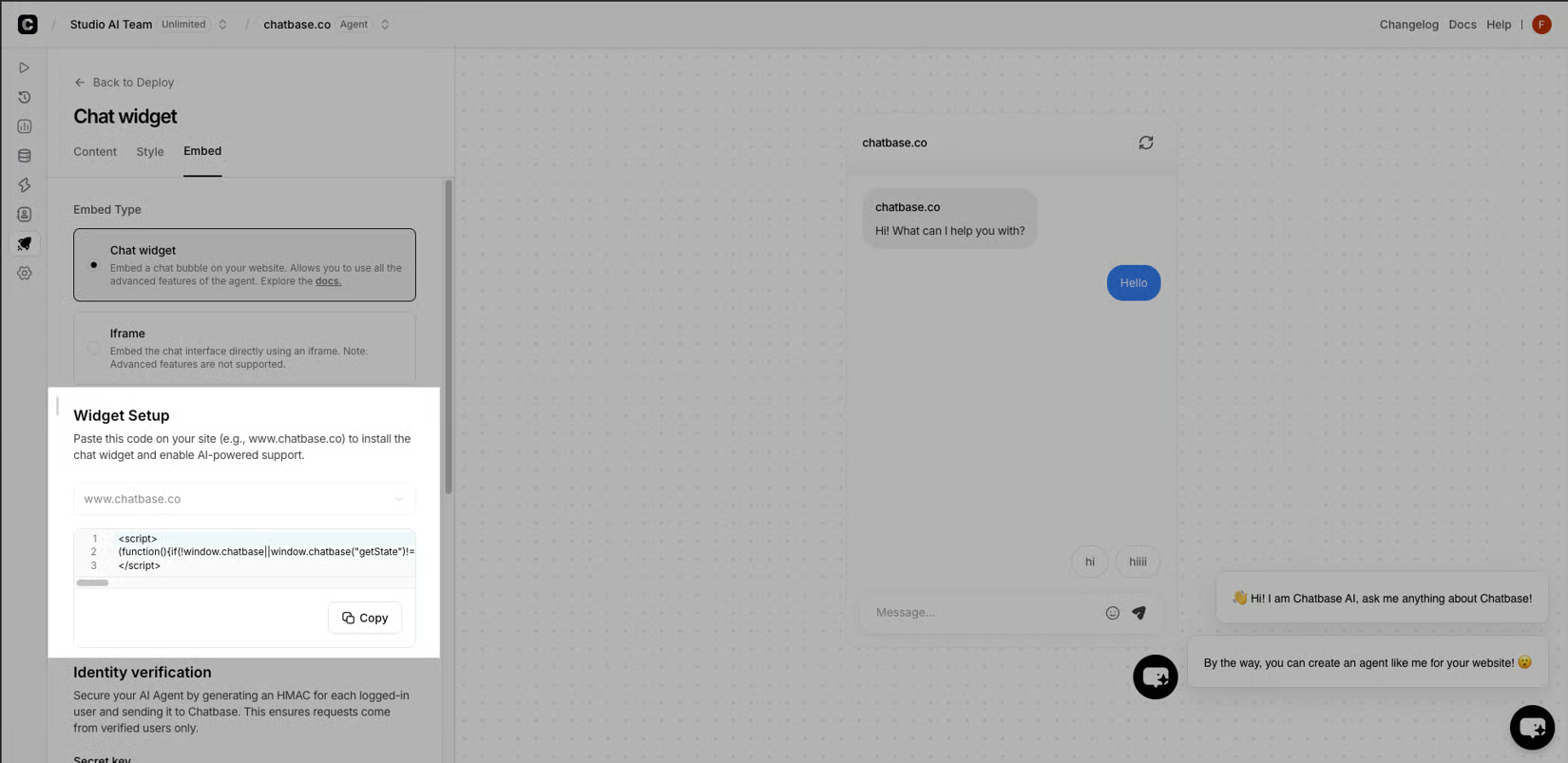
To train my AI agent, I started by connecting my data sources and defining the agent's role. This process was straightforward, and according to Chatbase, it can be done in minutes with no code required. The AI Agent Playbook also notes that modern AI agents can be trained with your content in clicks and built for free. Once my agent was trained, I deployed it across chat, email, and voice with a single click. Testing the agent before going live was crucial, and I ran real customer scenarios to validate accuracy, brand consistency, and edge case handling. For instance, I used analytics to measure usage, surface insights, and track sentiment and topics over time, similar to what I learned from What an AI Agent on a Website Does, How to Train It, and What to Watch in Week One.
Optimizing and Refining Your AI Agent's Performance
To optimize your AI agent's performance, focus on tracking resolution rates and refining instructions. According to Chatbase, running real customer scenarios helps validate accuracy and brand consistency. By following these steps, you can create an AI agent that delivers exceptional support, helping customers with inquiries and resolving issues end-to-end. For instance, using analytics to measure usage and track sentiment can improve customer satisfaction. Consider implementing a system to track customer interactions, such as analyzing conversation logs to identify areas for improvement. By leveraging AI agents, businesses can increase revenue and provide personalized guidance to customers.