
As someone who has implemented AI agents for customer support, I can attest to the benefits they bring. An AI agent can resolve issues end-to-end, increase revenue, and provide 24/7 support. To get started, you'll need to define your agent's role and set guardrails. No code is required, and you can be ready in minutes. For example, customer support can be handled by an AI agent that integrates with Zendesk to auto-assign and tag tickets. You can also connect Stripe to let agents pull subscription and invoice details for verified users.
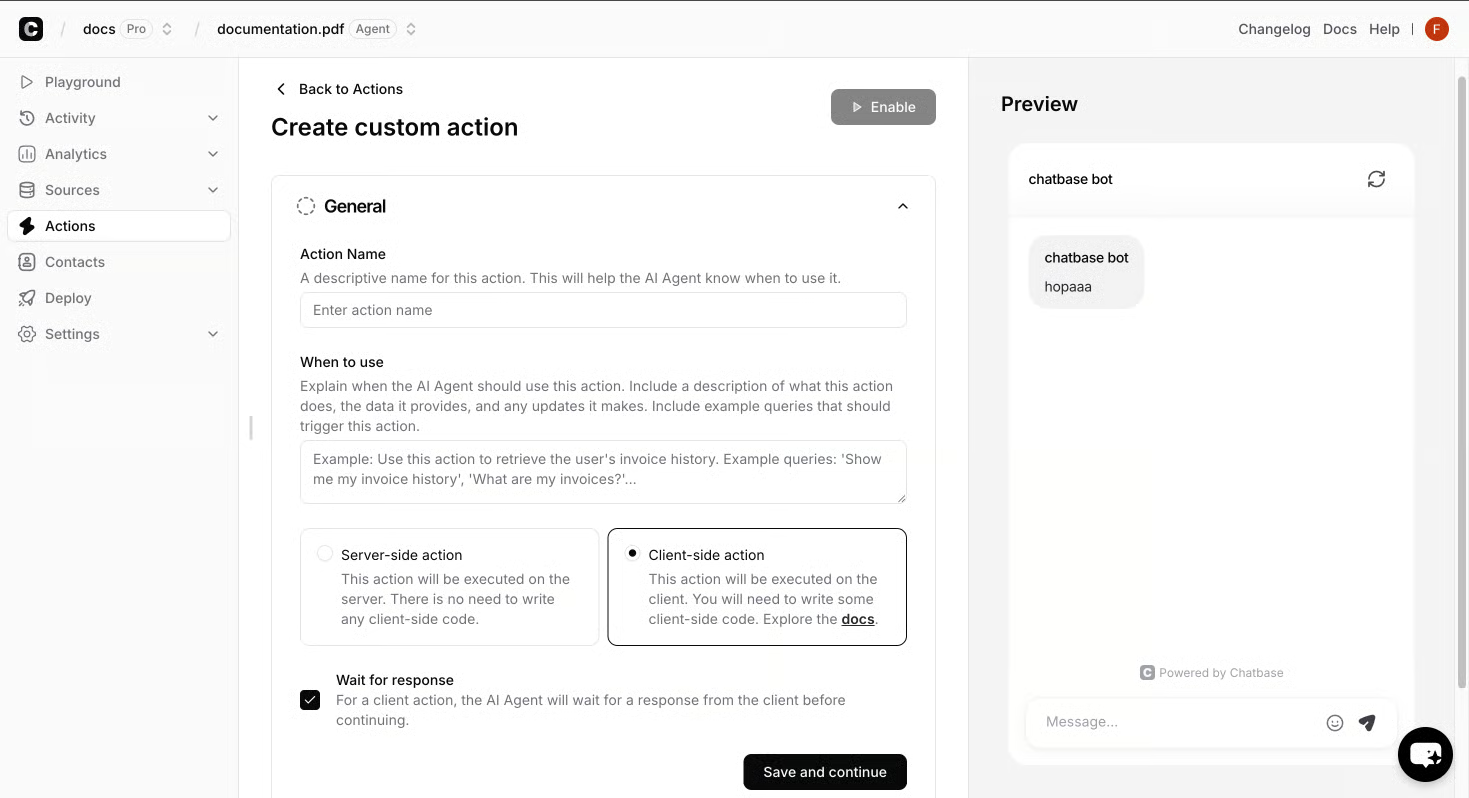
As I started to train and deploy an AI agent on my website, I realized the importance of connecting my data sources and defining the agent's role. No code was required, and I was ready to go live in minutes. The agent lifecycle consists of four stages: build, test, deploy, and optimize. In the build stage, I defined my agent's role and set guardrails. In the test stage, I ran real customer scenarios before going live. In the deploy stage, I published my agent across chat, WhatsApp, email, Slack, and more with a single click. In the optimize stage, I tracked resolution rates, reviewed escalations, and refined instructions. My agent improved with every conversation. For example, I integrated with Zendesk to auto-assign and tag tickets when human follow-up was needed. I also connected Stripe to let agents pull subscription and invoice details for verified users. By following these steps, I created an AI agent that delivered exceptional support at scale - across chat, email, and voice.
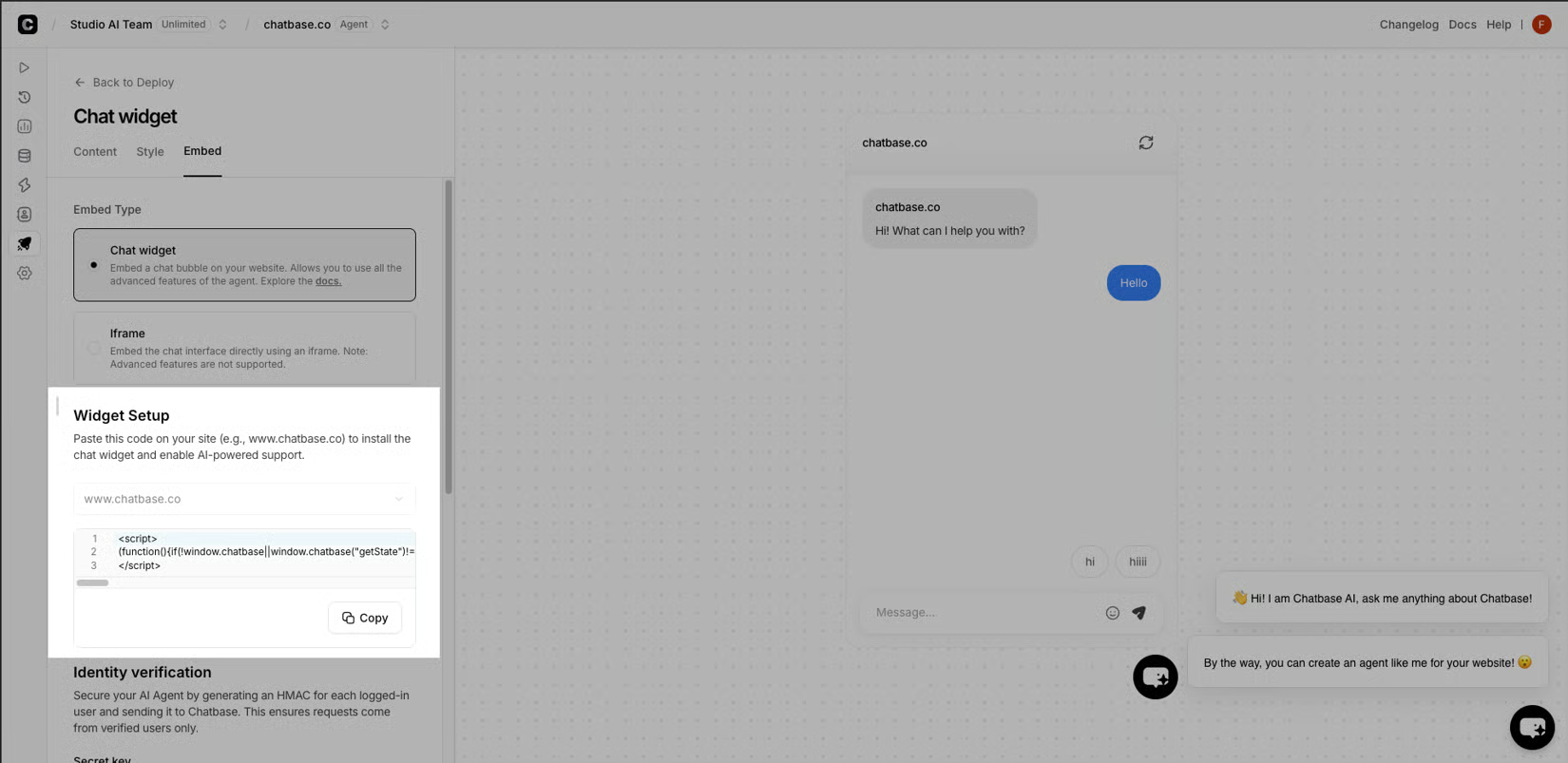
As I worked on optimizing my AI agent for better performance, I realized the importance of tracking resolution rates and reviewing escalations. By analyzing the agent's performance, I could identify areas for improvement and make data-driven decisions to enhance the customer experience. For instance, integrating with Zendesk to auto-assign and tag tickets when human follow-up is needed can help streamline the support process. Additionally, connecting Stripe to let agents pull subscription and invoice details for verified users can provide a more personalized experience. To compare the benefits of integrating with Zendesk and Stripe, consider the following:
- Auto-assigning and tagging tickets with Zendesk
- Providing personalized experiences for verified users with Stripe
By following these steps and continuously refining the agent's instructions, I can create an AI agent that delivers exceptional support at scale across chat, email, and voice.
As I implemented an AI agent on my website, I realized the value it brings to customer support. The agent can resolve issues end-to-end, increase revenue, and provide 24/7 support. By integrating with tools like Zendesk and Stripe, AI agents can provide personalized support and streamline the customer experience. For example, an AI agent can auto-assign and tag tickets, and pull subscription and invoice details for verified users. These features and benefits make AI agents a valuable addition to any website, allowing businesses to provide exceptional support at scale across chat, email, and voice. By leveraging these capabilities, businesses can improve customer satisfaction, reduce support costs, and drive revenue growth.
As I implemented an AI agent on my website, I saw firsthand how it could provide personalized support and streamline the sales process. By integrating with tools like Zendesk, I could auto-assign and tag tickets, making it easier to manage customer support. For instance, when a customer reached out with a question about their subscription, the AI agent could quickly pull up their subscription and invoice details from Stripe, allowing me to provide a more personalized response. This not only improved customer satisfaction but also reduced support costs and drove revenue growth. One of the key benefits of AI agents is their ability to provide 24/7 support, which was a game-changer for my business. By leveraging these capabilities, I was able to deliver exceptional support at scale across chat, email, and voice.
To implement an AI agent on your website, I started by defining the agent's role and setting guardrails. No code was required, and I was ready to go live in minutes. For example, I integrated my AI agent with Zendesk to auto-assign and tag tickets, making it easier to manage customer support. I also connected Stripe to let the agent pull subscription and invoice details for verified users, providing a more personalized experience. By following these steps, I created an AI agent that delivered exceptional support at scale - across chat, email, and voice.
To optimize my AI agent's performance, I tracked resolution rates and reviewed escalations. Analyzing the agent's performance helped me identify areas for improvement and make data-driven decisions to enhance the customer experience. For instance, integrating with Zendesk to auto-assign and tag tickets when human follow-up was needed helped streamline the support process. Additionally, connecting Stripe to let agents pull subscription and invoice details for verified users provided a more personalized experience. By continuously refining the agent's instructions, I created an AI agent that delivered exceptional support at scale across chat, email, and voice. In conclusion, optimizing an AI agent requires ongoing evaluation and refinement to ensure it continues to meet the evolving needs of customers.
Integrating with Zendesk and Stripe
To integrate with Zendesk and Stripe, I started by connecting my AI agent to these platforms. This allowed me to auto-assign and tag tickets in Zendesk, making it easier to manage customer support. I also connected Stripe to let the agent pull subscription and invoice details for verified users, providing a more personalized experience.
Here is a comparison of the benefits of integrating with Zendesk and Stripe:
| Integration | Benefits |
|---|---|
| Zendesk | Auto-assign and tag tickets, streamlined support process |
| Stripe | Pull subscription and invoice details for verified users, personalized experience |
By integrating with these platforms, I was able to enhance the customer experience and provide more effective support.
To track resolution rates and review escalations, I analyzed the agent's performance and identified areas for improvement. By integrating with Zendesk, I could auto-assign and tag tickets, streamlining the support process. Connecting Stripe allowed the agent to pull subscription and invoice details for verified users, providing a more personalized experience. Here is a comparison of the benefits of integrating with Zendesk and Stripe:
| Integration | Benefits |
|---|---|
| Zendesk | Auto-assign and tag tickets, streamlined support process |
| Stripe | Pull subscription and invoice details for verified users, personalized experience |
To optimize my AI agent's performance, I focused on refining its instructions and tracking resolution rates. By analyzing the agent's performance, I identified areas for improvement and made data-driven decisions to enhance the customer experience. For instance, integrating with Zendesk to auto-assign and tag tickets when human follow-up was needed helped streamline the support process. Additionally, connecting Stripe to let agents pull subscription and invoice details for verified users provided a more personalized experience. By continuously refining the agent's instructions, I created an AI agent that delivered exceptional support at scale across chat, email, and voice. ## Optimizing the Agent's Performance
As I started to implement an AI agent on my website, I realized the importance of defining the agent's role and setting guardrails. This was a crucial step in ensuring that the agent could provide effective support to my customers. I defined the agent's role as a customer support agent, and set guardrails to ensure that it could handle a wide range of customer inquiries. For example, I integrated my AI agent with Zendesk to auto-assign and tag tickets, making it easier to manage customer support. I also connected Stripe to let the agent pull subscription and invoice details for verified users, providing a more personalized experience. By following these steps, I created an AI agent that delivered exceptional support at scale - across chat, email, and voice. ## Defining the Agent's Role and Setting Guardrails