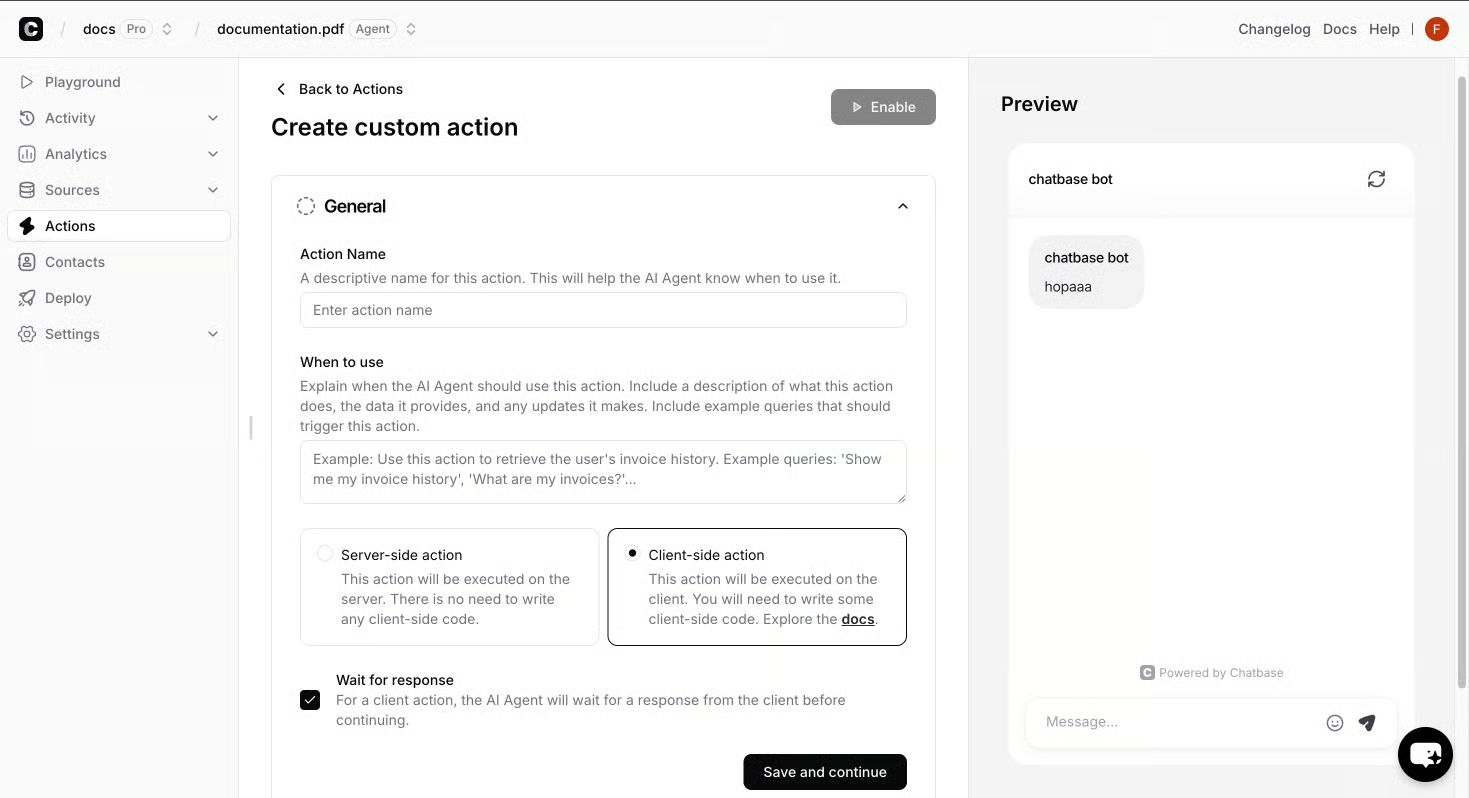
For sources I'd start with the pages that already answer the question right - the refund policy, the shipping page, the FAQ, and a clean product catalog with attributes the agent can actually quote. One answer per page, with the answer in the first paragraph. Prices, dates, and policies in plain text the agent can copy, not screenshots. If a page exists and the answer is buried in three paragraphs of brand poetry, I'd rewrite the page before I'd let the agent cite it. Garbage in, confident garbage out, eleven p.m. on a Saturday. If those pages aren't there yet, that agent is only as honest as the pages behind it.
What I'd change on the page, not in the prompt
If a page already says the thing the customer is asking about, I'd rewrite that page long before I'd retrain the agent. A clean refund policy beats a clever prompt every time. Garbage in, confident garbage out, eleven p.m. on a Saturday.
Actions
The first ten actions are the ones I'd actually take on day one, in this order, before I let the agent talk to a real customer.
- Pick the one job the agent is allowed to finish on its own - refunds under $200, order status, size questions - and hold the line on that scope.
- List the three questions customers ask before they buy, in the agent's own words, and write the answers in the same voice.
- Rewrite the refund page, the shipping page, and the FAQ so the answer sits in the first paragraph.
- Wire chat, email, and WhatsApp to the same inbox and the same voice layer.
- Pull the product catalog into a clean attribute sheet the agent can quote without paraphrasing.
- Set the handoff packet: transcript, order ID, the rule that triggered the stop, one line on what was already tried.
- Define the stop words. Anything past those words, the agent stops, says so, and passes the keyboard over.
- Run the first fifty chats in shadow mode and read every transcript before the agent replies to a real buyer.
- Stand up a feedback view for the support team so they can flag a wrong answer in one click.
- Schedule a weekly hour to read transcripts and cut the rules that aren't earning their keep. That list is short on purpose. Ten actions, not thirty, because the agent will tell you what it needs once it's in the wild, and the room to act on that feedback is what keeps the project alive past launch.
How I'd write the triggers
The first triggers I ever wrote were paragraphs of prose, and the agent treated them like suggestions. The version that actually holds is short, named, and lists the stop words the agent must hit before it answers. The four fields I'd put on every trigger:
- the exact stop phrase, in quotes, not paraphrased
- the action the agent takes when it hears that phrase
- the handoff rule it falls back to when it can't take that action
- a one-line reason the rule exists, so a teammate can edit it without guessing A trigger that reads like a paragraph will drift the first week. A trigger that reads like a rule will survive the next agent you swap in.
Where I'd stop and pass it up
I'd hold the line on three jobs the agent finishes alone and pass everything else. Refunds under $200, order status, and size questions are the set I'd let it own end to end. Anything past those, the agent stops, says so in plain English, and hands the keyboard to a teammate with the transcript, the order ID, the rule that triggered the stop, and a one-line note on what it already tried. The list I'd hold the sources to is short: one answer per page, in the first paragraph, in plain text the agent can copy. That handoff is the whole point. The agent is honest about what it can't do, and the human starts at sentence two, not sentence one.
Same agent, three doors
The same agent lives on the website chat, on the help email, and on the WhatsApp button if the storefront runs there. One agent, one inbox, one voice across all three. I keep the conversation memory in the same place the agent reads its sources from, so a buyer who starts on chat and switches to email mid-thread doesn't get re-asked their order number. That continuity is the quiet win nobody notices when it's working and the first thing customers complain about when it isn't.
Channels
The first time I wired an agent to more than one channel, I did it backward - I tuned the answers for weeks, then bolted the channels on at the end. The chat widget sounded calm. The email reply sounded formal. The WhatsApp button sounded like a different company. Three surfaces, one product, three voices. I spent the next weekend redoing the tone layer so the same agent could speak the same way in all three. Now channels go in early, before I start polishing copy, because a voice that only lives in one window drifts the first time it meets a second one.
How a chat ends
The chat ends one of two ways. Either the agent finishes the job - replacement issued, demo booked, size pointed out - or it stops, says something close to "let me grab a teammate," and hands the keyboard over. A clean handoff carries the transcript, the order ID, and the reason it stopped, so the human starts at sentence two, not sentence one. The four things I'd put on every handoff packet:
- the full transcript, not a summary
- the order ID or lead ID the agent was working off
- the rule that triggered the stop ("refund over $200," "legal language," "customer asked twice")
- a one-line note on what the agent already tried
That last field is the one I'd argue for. Without it, the teammate rereads the whole thread to figure out what was offered before they jump in. With it, they pick up mid-sentence.
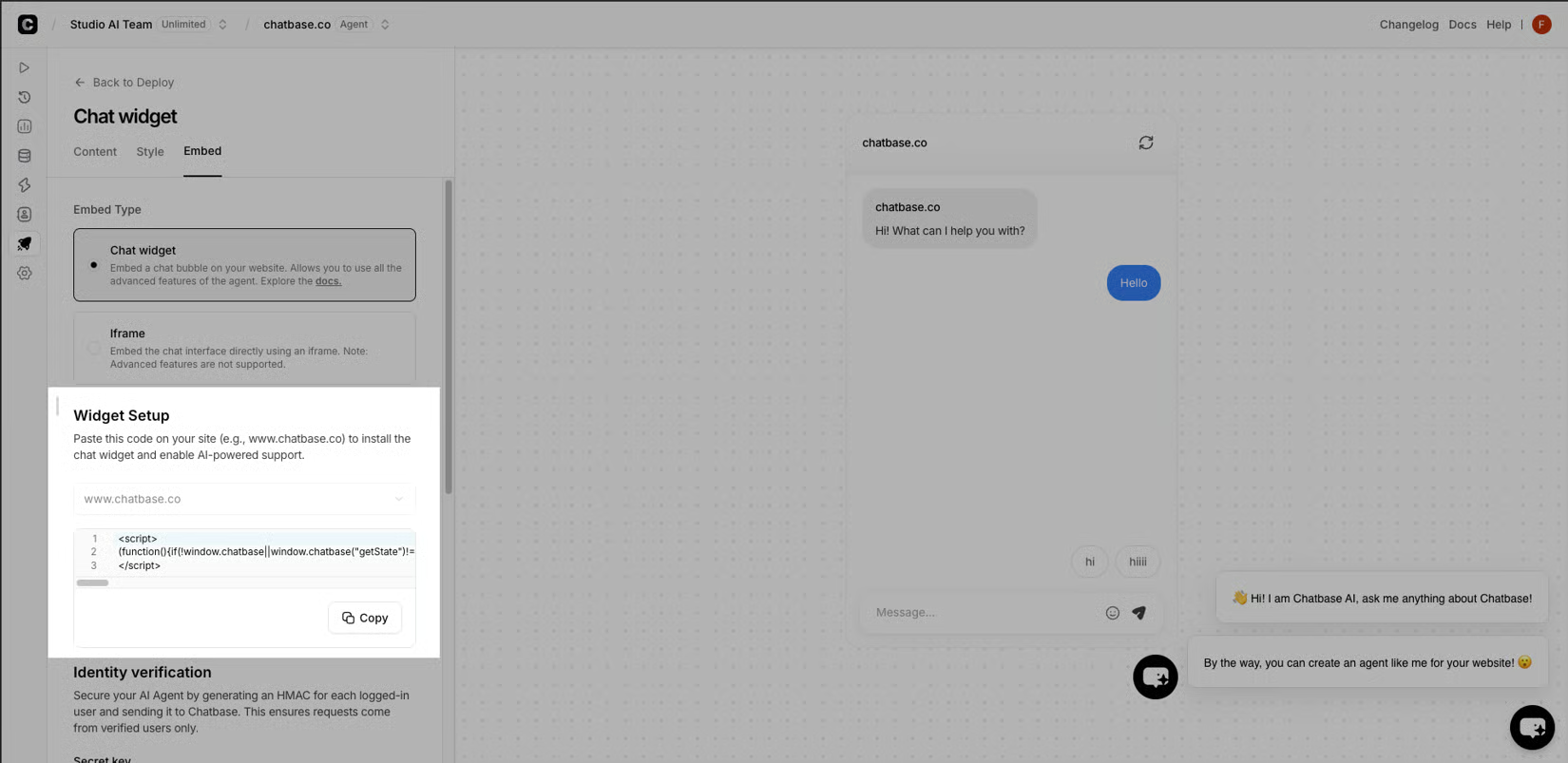
AI Replies or Human Takeover outbound campaign features
If you're picking one to put an AI agent on your website, channels are the chapter most teams leave for last and the one that decides whether the voice survives contact with real customers. I'd wire the surfaces first, watch the tone drift between them, and only then start tuning answers. Otherwise the chat widget reads one way on Tuesday and the email reply reads another way on Wednesday, and nobody on the team can agree on which one is right. The first clean handoff I ever watched happened at 11:40 p.m. on a Saturday. A buyer asked for a refund over our agent's limit, and instead of improvising, the agent stopped, said the right thing in plain English, and dropped the full transcript into our support queue with the order ID and the rule that triggered the stop. The teammate on call the next morning read sentence two of the customer's thread, not sentence one, and the refund went out before lunch. That is what a good handoff buys you - the human starts mid-stream, not from scratch.