
How an AI agent fits into the digital marketing stack
An AI agent is a conversational layer that sits between a brand's owned surfaces and the rest of the marketing and support stack. Across the Chatbase customer stories in this article, the agent is embedded on landing pages, in help centers, and inside messaging channels, trained on the same product, policy, and merchandising content the marketing team already maintains. From the marketing team's perspective, it takes over two jobs that used to live in separate tools - top-of-funnel qualification and post-click support - and hands structured data back to the CRM and the knowledge base.
Where the agent plugs in
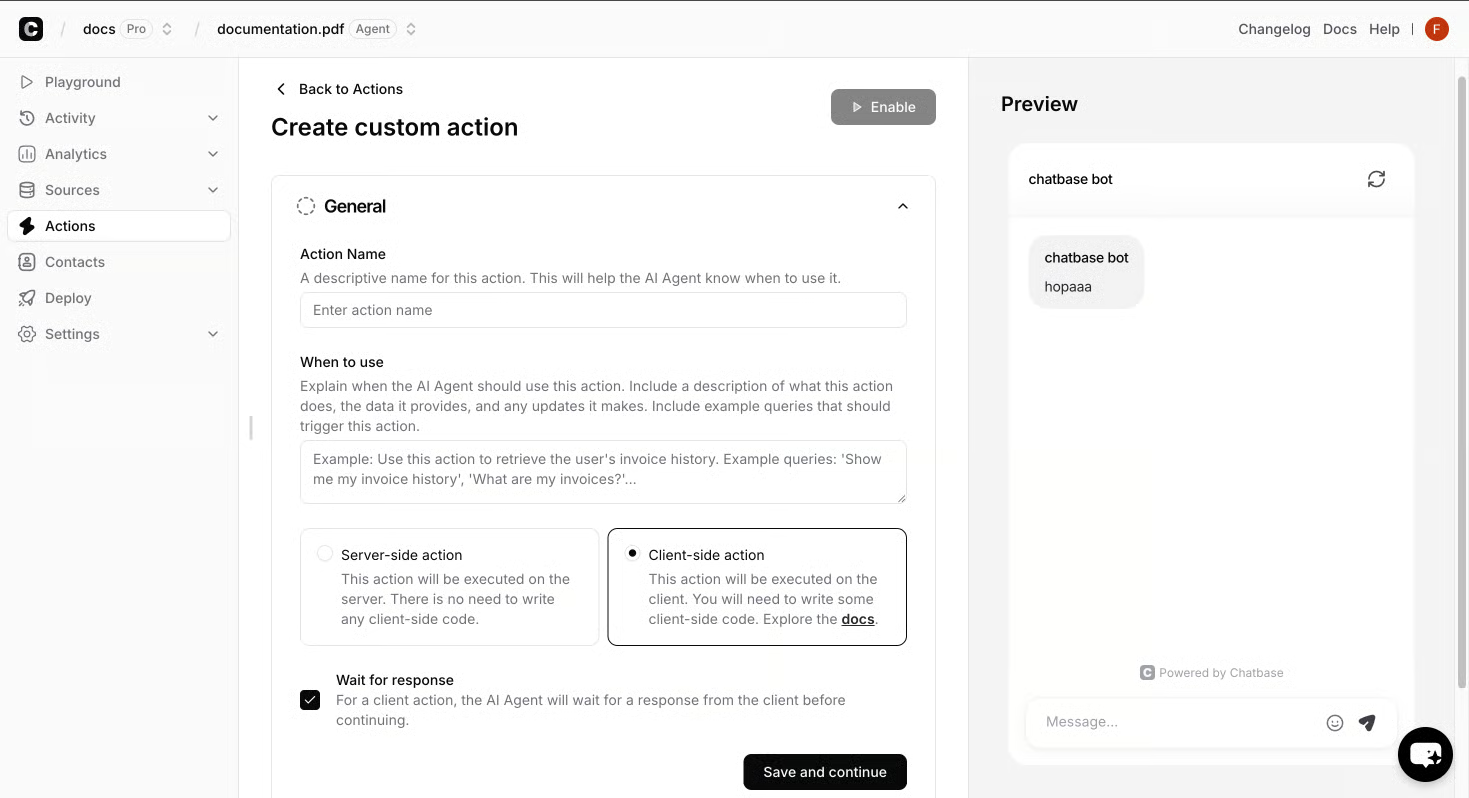
The agent shows up in three consistent places. On the acquisition surface - Aplazo's merchant landing page, where it explains the value proposition, answers FAQs, collects merchant information, and routes qualified leads into the CRM. Inside the support channel - Jumia J Force's customer-facing assistant resolving routine questions across eight African markets, and Paula inside Saarbruecker Zeitung's subscriber experience. And inside the merchant's storefront - Rocksteady's Shopify integration, where the native install trains the agent on the product catalog, inventory, and store details so it knows the store from day one.
Two product features that change the math
Two capabilities show up across these stories. AI Replies let the agent answer customer questions automatically, which is how Jumia J Force is resolving a large share of total support volume. Human Takeover keeps a person in the loop for the cases that matter - Aplazo reserves human involvement for high-value merchants and explicit handoff requests, and Rocksteady steps in for complex battery recommendations. Together they let a team scale acquisition and support without scaling headcount linearly.
What the agent sends back to the stack
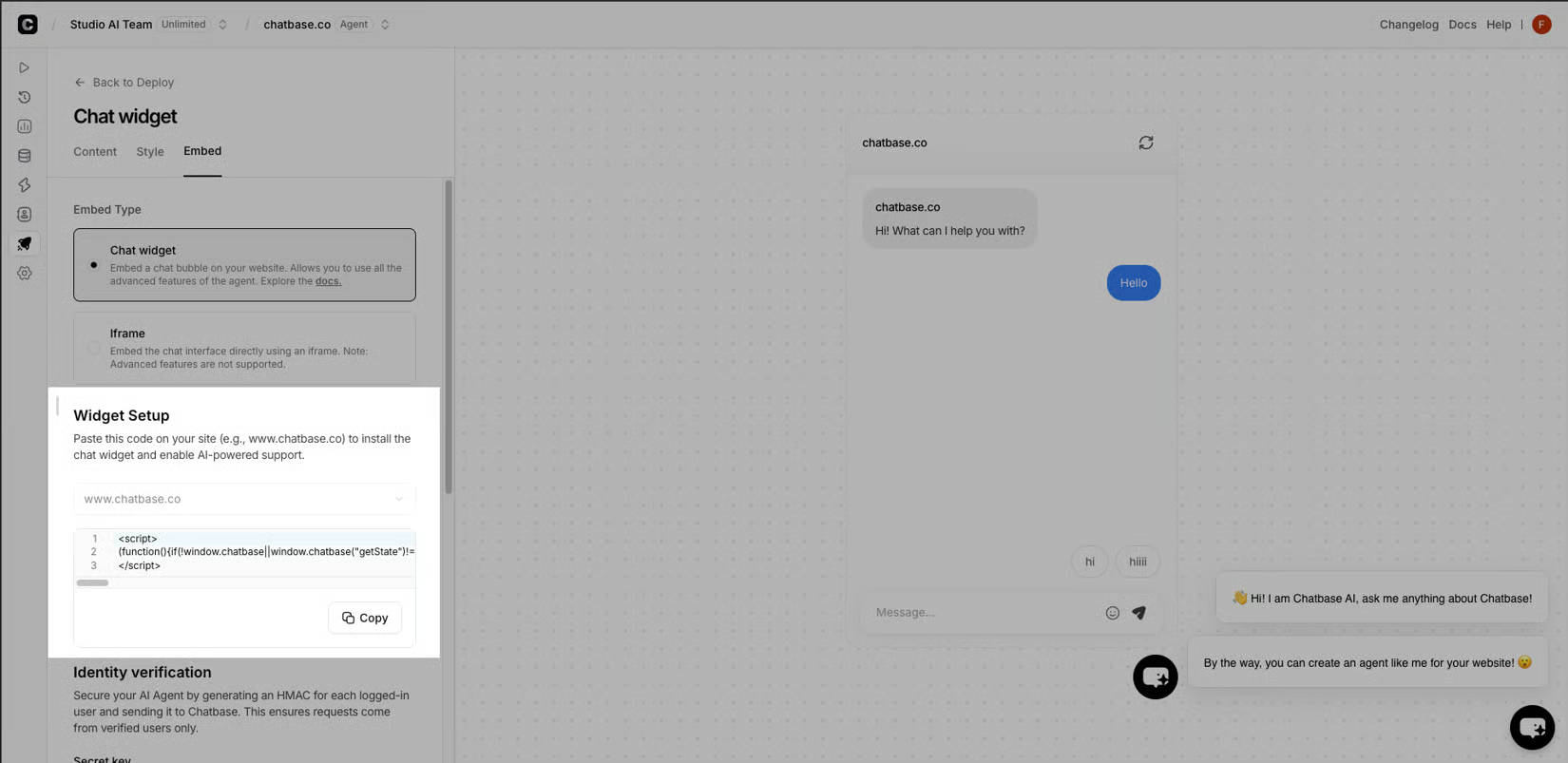
The agent is not a closed loop - Aplazo feeds conversation patterns into weekly fine-tuning. In both Aplazo and Rocksteady, the conversation log becomes a marketing asset: a source of trend data on what customers and merchants actually ask, which informs the knowledge base and the broader campaign strategy.
Qualifying and converting merchants with an AI agent (Aplazo)
Aplazo, the leading Buy Now, Pay Later provider in Mexico, embedded the Chatbase AI agent on its merchant landing page and promoted it through paid media. Merchant sign-ups used to run on email and phone calls; prospects went cold mid-funnel without clear next steps, and the sales team absorbed the cost. The agent replaced that manual follow-up with a 24/7 conversation that explains the value proposition, answers FAQs, collects merchant information, and qualifies merchants before routing them into the CRM.
Why the team chose an AI agent
Aplazo evaluated its options and chose Chatbase as its first and only implementation. The deciding factor was the agent's ability to handle open-ended, nuanced questions - rule-based flows could not educate and qualify merchants in a conversation that felt natural rather than scripted.
What changed for the funnel
| Outcome | Result |
|---|---|
| Overall merchant closed-won rate | 2.2x lift |
| Share of closed-won inbound merchants coming through the agent | 50% |
| Additional headcount required | 0 |
The 2.2x lift was driven by a consistent stream of organic leads arriving through the agent. One in every two inbound merchants Aplazo closes now comes through an automated channel that did not exist before, with no additional headcount. Those merchants arrive more informed and more committed - the agent has already self-selected, educated, and shared qualifying information before a salesperson joins, and human intervention is reserved for complex questions, high-value opportunities, or merchants who explicitly ask to speak with someone.
Resolving support volume so marketing can focus on growth (Jumia J Force)
Jumia's J Force team faces the classic ecommerce support bottleneck: a large, distributed customer base across eight African markets asking the same recurring questions, while the human team spends its days answering routine tickets instead of working on growth. The Chatbase AI agent now absorbs a large share of that recurring volume, and the team is exploring how to extend the same agent into more transactional and onboarding workflows.
What the agent absorbed and what it means for marketing
The agent resolves the everyday questions that used to dominate the queue - order status, returns, account issues - and is trained to handle accessibility nuances across markets with lower digital literacy. Support volume becomes a marketing problem when it starves the team of time to ship campaigns, test offers, and improve the funnel. By moving roughly half of the support load to an always-on agent, J Force gives its marketers room to focus on acquisition and retention.
Turning support conversations into a knowledge base improvement loop (Rocksteady)
Rocksteady Corp, the California-based portable audio designer, embedded the Chatbase AI agent into its Shopify storefront and saw the expected result first: the agent absorbed most recurring support volume and left the team and customers happier.
The marketing-relevant result came next. The team began reviewing past conversations as a knowledge base improvement loop - watching what customers actually ask, where the agent struggles, and what new topics are emerging - and treating the conversation log as strategic trend data rather than reactive transcripts. Those insights flow back into the knowledge base the agent is trained on, so the agent keeps getting sharper on the questions real shoppers are asking today.
Driving subscriber engagement beyond the first question (Saarbruecker Zeitung)
At Saarbruecker Zeitung, an AI agent named Paula now sits inside the subscriber experience. The marketing-relevant result is not just faster answers - it is subscribers who stay in the conversation. With an average of nearly 5 messages per conversation, Paula is drawing readers past the first question, and the time her human colleagues used to spend on routine tickets is being redirected to welcome calls for new subscribers, win-back work, and personalized support for digital-product adopters.
What these deployments mean for digital marketing teams
Across these four deployments, the pattern is the same: the AI agent consolidates top-of-funnel qualification, post-click support, and routine merchant or subscriber conversations into one conversational layer that hands structured data back to the CRM, the support queue, and the knowledge base. The marketing impact is a shift in where the team's hours go. Aplazo's sales team focuses on strategic accounts; Jumia's J Force redirects headcount from ticket triage to growth; Rocksteady treats conversation logs as trend data; Saarbruecker Zeitung reinvests routine-support hours into welcome calls and win-back work.
| Outcome | Result |
|---|---|
| Aplazo merchant closed-won rate | 2.2x lift |
| Share of closed-won inbound merchants via the agent | 50% |
| Additional headcount required | 0 |
| Jumia J Force support volume absorbed | large share across 8 African markets |