
For a guided walkthrough of the offer behind these deployments, see AI Agent for Website.
An AI Agent for website is an on-page assistant that reads your own content and answers visitor questions in plain language, right where the question is asked, so a buyer looking at sizing sees an answer about sizing and a prospect reading pricing sees a response tied to that pricing page (AI Agent for Website: What It Is, What It Does, and How to Launch One).
From a chat bubble to a working teammate
On a retailer's site, an AI Agent trained on the catalog and policy pages can field sizing and shipping questions and recover abandoned carts, while on a SaaS site the same pattern answers onboarding questions, qualifies against pricing, and books a demo through a connected calendar - the job shifts with what your business publishes.
A Chatbase AI Agent is built from six building blocks that map to a real conversation: the content it reads, the actions it takes, the systems it talks to, the identity rules it follows, the way it is placed on the page, and the analytics that improve it.
Sources: the content the agent reads
The first block is the knowledge base. Chatbase agents are trained on the files, websites, Notion pages, and custom Q&A pairs a team already owns, so the answers come from the business itself rather than from a generic model (How Chatbase Deployed AI Agents Across Ecommerce, Media, and Fintech: Customer Stories and Results).
Actions and identity: the work the agent can do
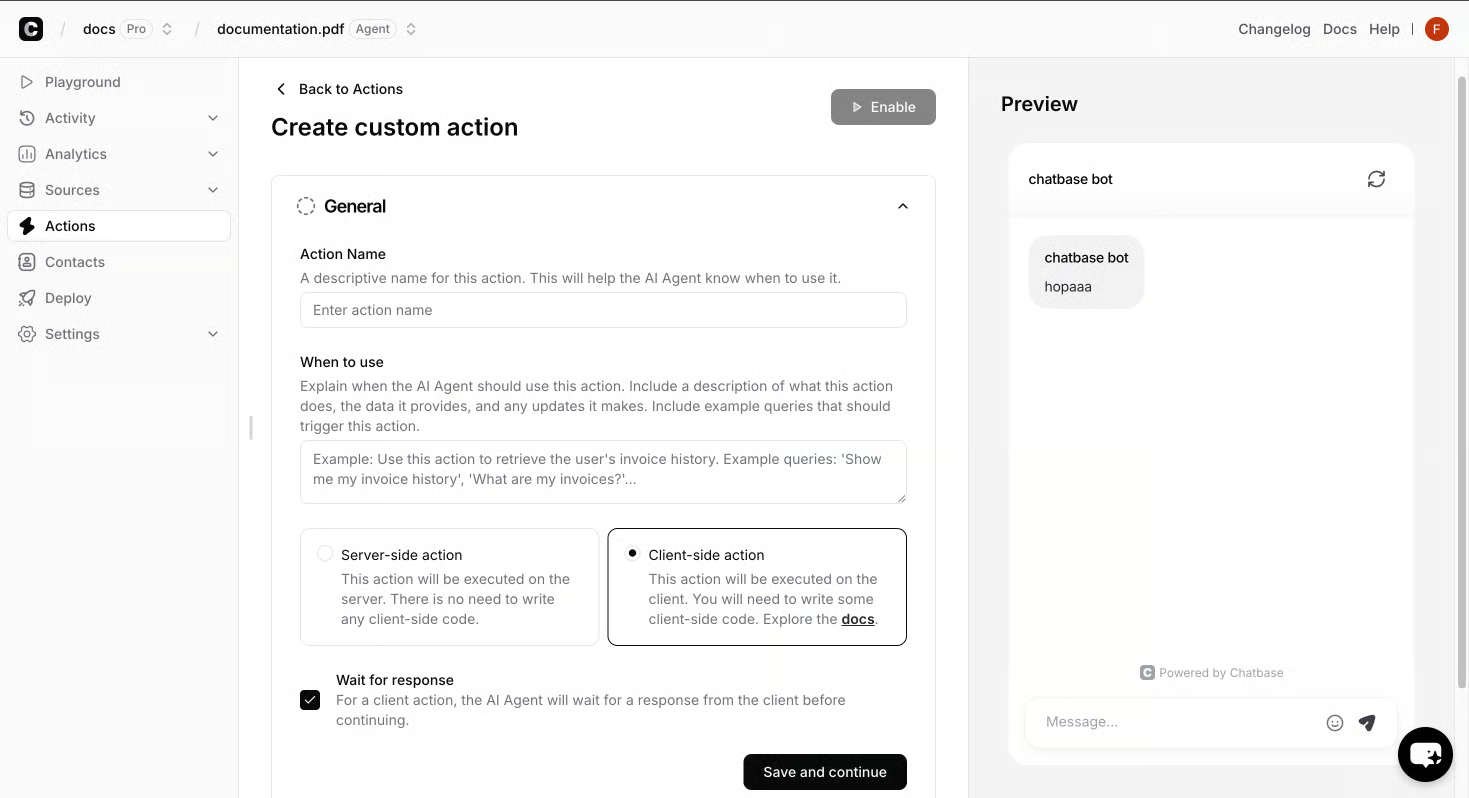
The second block is actions. Built-in Actions include Calendly for booking, Slack for internal alerts, Web Search for fresh context, and Collect Leads for capturing contact details; a Custom Action lets the agent call any API endpoint the team needs. Identity & Contacts sits beside those actions so that when the agent pulls a subscription from Stripe or opens a Zendesk ticket, it is doing so for a verified user, not for whoever is at the keyboard (Beyond Clicks: How Strategic Digital Marketing Drives Real Business Growth).
Integrations, embeds, and analytics
The third block covers where the conversation goes. Integrations include Zendesk, Stripe, WhatsApp, Slack, Zapier, and ViaSocket. Embeds and the API put the agent on the page as a website widget, inside a custom UI, or behind a direct API call. Analytics closes the loop with Topics, Sentiment, chat activity, and exports that show which questions were resolved, which were escalated, and where the instructions need tightening.
Build: connect your data and define the role
Sources come first, because the agent only knows what it is given. The playbook lists files, websites, Notion pages, and custom Q&A pairs as the supported source types, so a retail team can point the agent at its catalog and policy pages, a media team at its articles, and a fintech team at its product docs and FAQs. Alongside the knowledge base, the team writes the agent's role and guardrails in the Instructions field - the kind of system prompt shown in the Instructions preview, which tells the agent to greet the customer, ask about the return, and request an order number before resolving the issue. Built-in Actions (Calendly, Slack, Web Search, Collect Leads, plus a Custom Button) are toggled on in the same step, and a Custom Action is wired in whenever the team needs the agent to call an internal API (Hello, world).
Test: run real scenarios before going live
The Test step is where most teams catch the gaps that would otherwise show up in production. Chatbase supports running real customer scenarios against the agent so the team can validate accuracy, brand consistency, and edge case handling before a single visitor sees the widget. For an e-commerce deployment, that means running the catalog and policy agent through sizing, shipping window, and damaged-order flows; for a SaaS deployment, it means walking the agent through onboarding, pricing qualification, and a Calendly handoff. Anything that misses is rewritten in the Instructions field or corrected in the source content and rerun (AI Agent for Website: What It Is, How It Works, and How to Launch One).
Deploy: pick the channel and embed
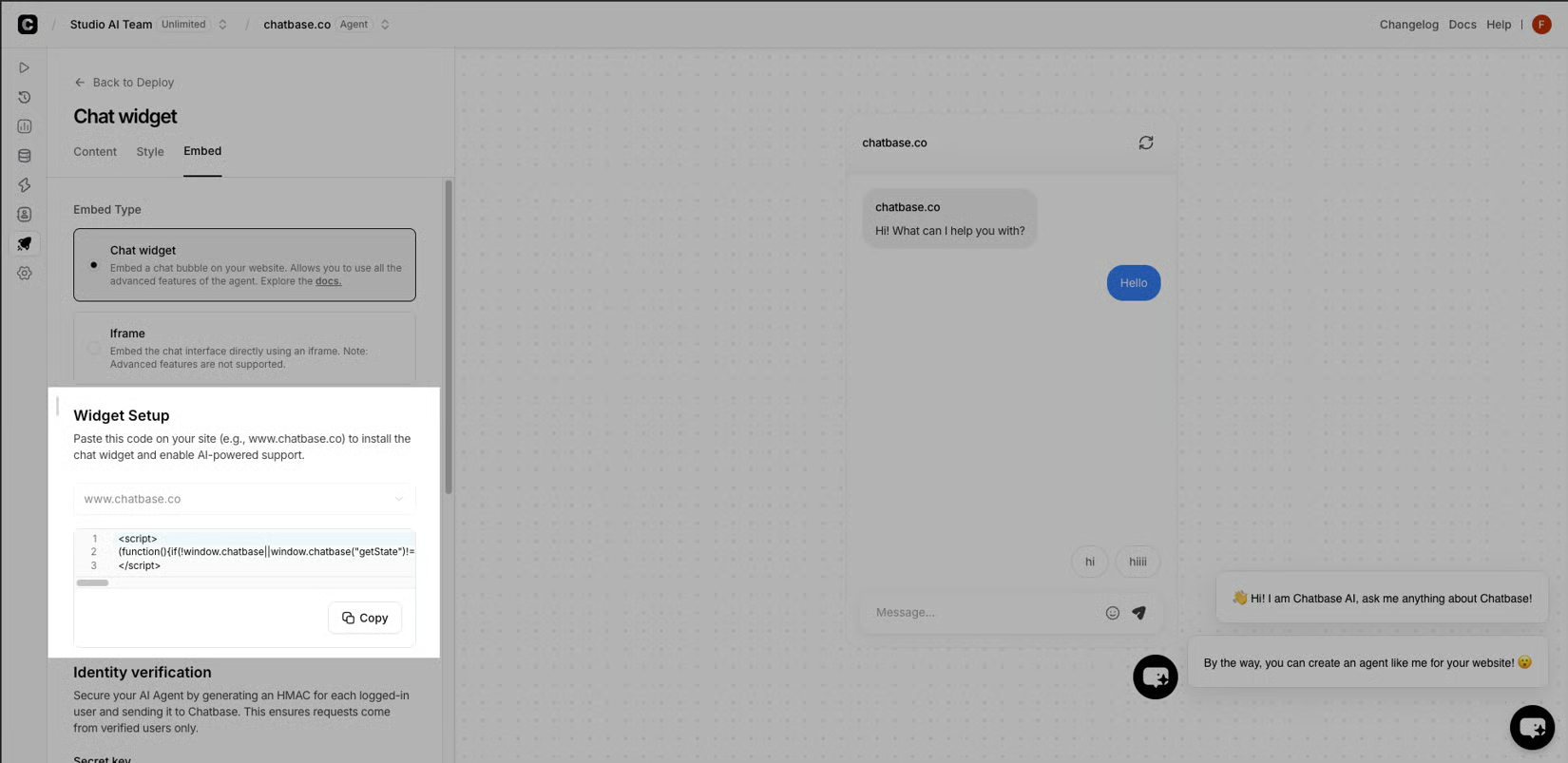
Deployment is a single click once Test is clean, and the agent lands on chat, WhatsApp, email, Slack, and other connected channels while Embeds and the API cover the website path. Embeds include the standard website widget and a custom UI for teams that want the agent to match their own design system, and the API puts the same agent behind a direct call from any front end. Zendesk, Stripe, Zapier, and ViaSocket switch on at the same moment, so the agent is already wired in (AI-Powered Agents in Digital Marketing: Deployment, Training, and Analytics).
Optimize: read the analytics and tighten the instructions
Once the agent is live, Analytics carries the lifecycle forward. Topics shows which questions came in most often, Sentiment tracks how visitors feel about the answers, and chat activity plus exports show which conversations were resolved, which were escalated to a human, and where the Instructions field needs tightening. That signal feeds the next Build step and the next round of Test scenarios as the agent gets sharper with every conversation (How Digital Marketing Teams Use AI Agents to Scale Acquisition and Support).
Support deflection and sales guidance on the same agent
On an e-commerce site, the agent is trained on the catalog and policy pages, so sizing, shipping, and returns are answered from the words the team already wrote. The same pattern runs in financial services, where lost cards, disputed charges, and account changes are resolved inside the guardrails the team sets, and in travel and hospitality, where availability, rates, and check-in questions are answered against the property's own content. On a SaaS site the same agent answers onboarding questions inside product docs, qualifies a prospect against pricing, and hands the conversation to a Calendly booking once the fit is clear (About).
Outbound campaigns with AI Replies and Human Takeover
For outbound motions, the agent is wired into campaigns where AI Replies and Human Takeover work side by side. AI Replies handles the routine follow-ups it can resolve on its own; Human Takeover passes the conversation to a person when the rules say it should, so the team stays focused on the conversations that need a human while the agent carries the volume.
Analytics carries the lifecycle forward: Topics shows which questions came in most often, Sentiment tracks how visitors feel about the answers, and chat activity plus exports show which conversations were resolved, which were escalated, and where the Instructions field needs tightening - signal that feeds the next Build step so the agent gets sharper with every conversation.
Support deflection that pulls from your own pages
On an e-commerce site, the catalog and policy pages are the knowledge base, so sizing, shipping, and returns are answered from the words the team already wrote. The same pattern runs in financial services, where lost cards, disputed charges, and account changes are resolved inside the guardrails the team sets, and in travel and hospitality, where availability, rates, and check-in questions are answered against the property's own content. On a SaaS site the same agent answers onboarding questions inside product docs, qualifies a prospect against pricing, and hands the conversation to a Calendly booking once the fit is clear.